
How to Find Recently Released Collier County Inmates
No separate "released within X days" list exists on the Collier County Sheriff's public pages. What does exist is the Sheriff's Arrest and Warrant Search at www2.colliersheriff.org/arrestsearch, which covers arrest records going back to January 1, 2016, plus all active warrants. The key is the "In Custody Only" checkbox. When that box is checked, you see only people currently held. Uncheck it and search by name, date of birth, or booking date, and you will see both in-custody and previously booked individuals. If a record shows no "IN CUSTODY" flag and lists a "BONDED" status with a date, that person has likely been released from local custody.
The arrest search does not track every method of release. A person may bond out, be released on recognizance, complete a jail sentence, or transfer to state prison without a visible "released" marker. Bond status on the public profile shows one possible outcome. The Collier County Sheriff's arrest database also caps results at 100 records per search and uses exact last-name matching, so a common name may require adding a date of birth or booking date to narrow results. For final case outcome, the Clerk's court case portal at cms.collierclerk.com/showcaseweb is the right source; release from jail does not mean the court case is closed or dismissed.
The Sheriff's daily Today's Arrests report at www2.colliersheriff.org/arrestsearch/Report.aspx lists bookings from the most recent report period. Bond status fields in that report sometimes show "No information available" for a fresh booking and "BONDED" with a date once someone has posted bond. Comparing the booking date and bond date gives a rough sense of how long someone was held before release.
Setting Up Collier County VINELink Release Notifications
VINELink is a free victim and public notification service that tracks custody status changes in participating jails and prisons. When a Collier County inmate is released, transferred, or escapes, VINELink can send an automated alert by phone, email, or text. Victims and others who need to monitor release activity are the primary users, but VINELink is open to anyone. The service does not publish an open roster of released inmates; instead, it sends targeted alerts tied to a specific person's record once you register.
VINELink covers local jail custody where the agency participates in the statewide notification network. It may also cover Florida Department of Corrections releases for state-sentenced offenders. Coverage and timeliness depend on the participating agency's data feeds, so VINELink should be used alongside direct phone verification rather than as the sole source.
The VINELink platform is the main portal for setting up alerts. The search fields available on VINELink include:
| Field Label | Type | Required | Notes |
|---|---|---|---|
| State / Agency | Dropdown / search | Yes | Select Florida, then choose the Collier County agency context. |
| Name or ID | Text | Optional | Search by offender name or ID to locate the custody record. |
| Notification signup | Web form | Optional | Requires phone number, email, or other contact method to receive alerts. |
The following image shows the VINELink public portal, where Florida users can search custody records and register for release alerts linked to a specific person.
VINELink custody notification platform lets you register to receive alerts when a Collier County inmate's custody status changes, including release and transfer events.
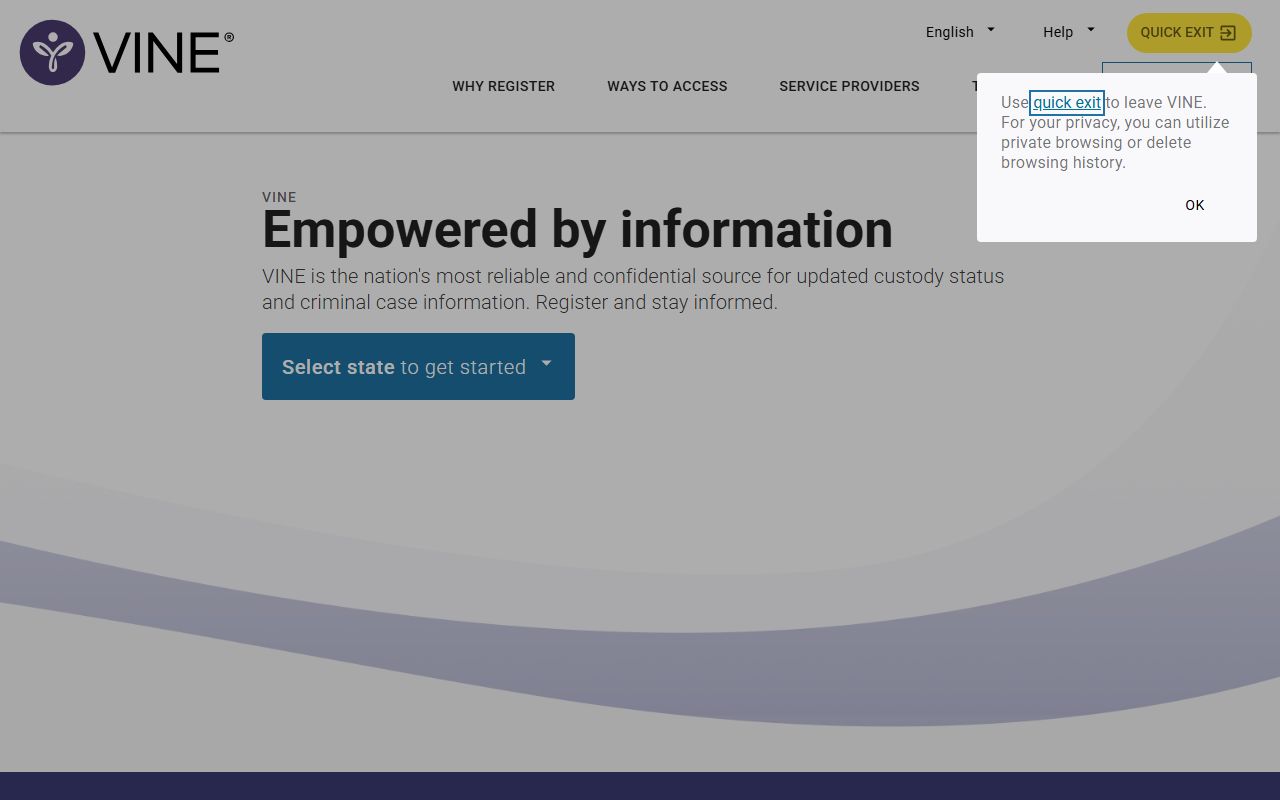
Once you register on VINELink, the system sends automated notifications whenever that person's status changes in the connected jail or corrections database, reducing the need for repeated manual phone calls.
- Go to vinelink.com and select Florida from the state menu.
- Search for the inmate by name or facility ID to locate the correct custody record.
- Choose a notification method: phone, email, or text message.
- Complete the registration form and confirm your contact details.
- VINELink will send alerts when the person is released, transferred, or if custody status changes.
Searching State and Federal Released Collier County Inmates
When a Collier County inmate is sentenced to state prison rather than serving time locally, custody moves from the Sheriff's jail to the Florida Department of Corrections. The local jail record may no longer show an active booking, and the person will appear in the Florida DOC offender search instead. The Florida Department of Corrections offender search covers both currently incarcerated state offenders and those under community supervision such as probation or parole. It also includes offenders who have been released from state custody. Searching by name or DC number will show whether someone is in state prison, on supervision, or has completed their sentence.
The Florida DOC search is public and does not require registration. A DC Number is the most reliable identifier for an exact match, but name searches with race, sex, and release status filters help narrow results when the number is not known. Release status filters can be especially useful for finding Collier County residents who have left state custody.
The image below shows the Florida Department of Corrections offender search entry page, which is the starting point for locating state inmates and those who have completed Florida prison sentences.
The Florida DOC offender search is the authoritative source for state prison releases and active community supervision in Florida, including offenders with Collier County origins.
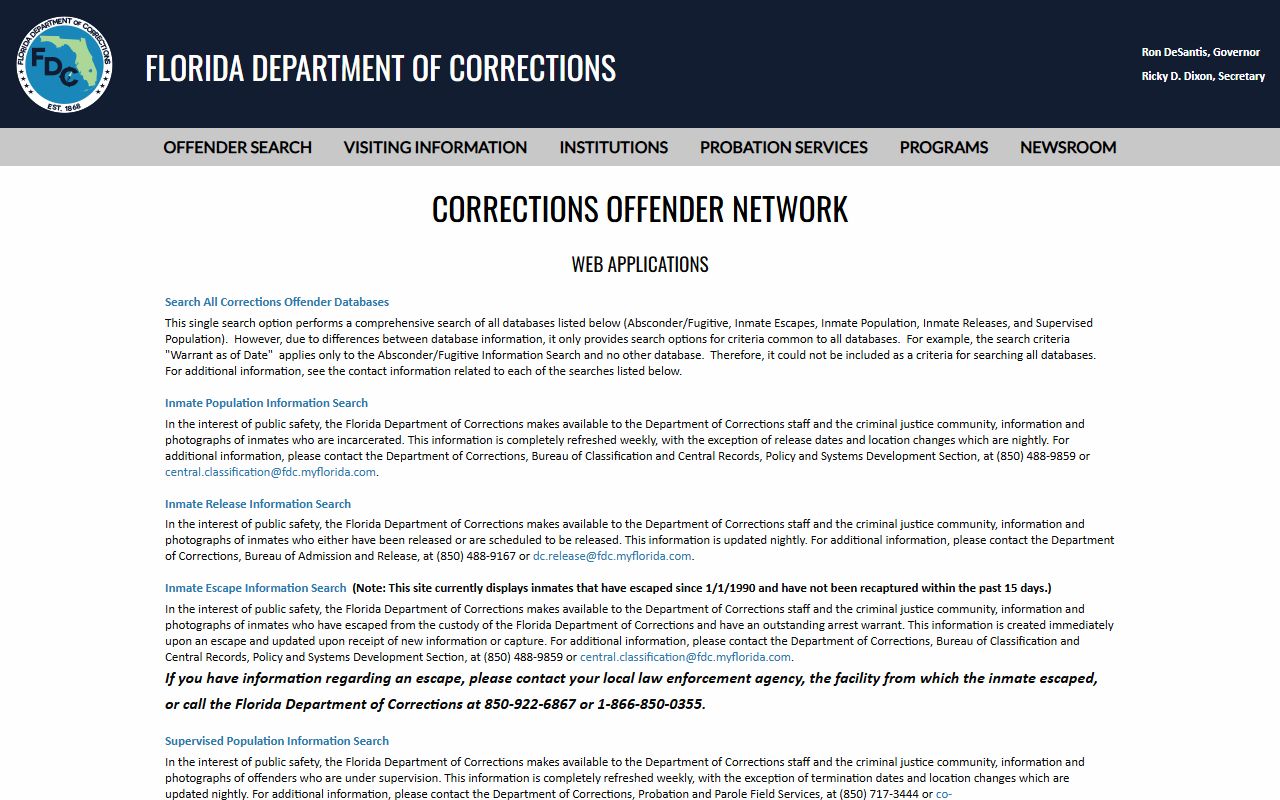
Results from the Florida DOC search include release dates, current supervision status, and the supervising region, giving a clearer picture of where a released offender stands within the corrections system.
| Field Label | Type | Required | Notes |
|---|---|---|---|
| Search by Name / DC Number | Text | Optional | Use DC Number for the most precise match when searching state prison or supervision population. |
| DC Number | Text | Optional | Best exact identifier for a Florida state-sentenced offender when known. |
| Last Name / First Name | Text | Optional | Name lookup; can return multiple results for common names. |
| Race / Sex / Release Status | Dropdown / filters | Optional | Filters to narrow results; release status filter is useful for finding completed sentences. |
For federal cases, Collier County sits within the U.S. District Court for the Middle District of Florida, Fort Myers Division. A person convicted and sentenced in federal court serves time in a federal Bureau of Prisons facility, not a state prison or the Collier County jail. The Bureau of Prisons inmate locator covers all federal inmates and includes people who have been released to supervision. Searching by BOP Register Number gives the most direct result; name searches also work and can be narrowed by race, sex, and age range.
| Field Label | Type | Required | Notes |
|---|---|---|---|
| BOP Register Number | Text | Optional | Exact federal identifier assigned at federal booking; fastest path to a specific record. |
| DCDC / FBI / INS Number | Text | Optional | Alternate identifiers accepted when the BOP Register Number is unavailable. |
| First / Middle / Last Name | Text | Optional | Name search; middle name helps narrow common first/last combinations. |
| Race / Sex / Age | Filters | Optional | Demographic filters help separate results where multiple people share the same name. |
Note: The BOP locator and Florida DOC search are separate systems. A Collier County arrest can lead to state prison, federal prison, or neither, depending on the charges and outcome.
Verifying Collier County Inmate Release By Phone
The fastest direct method for verifying whether someone is still in Collier County custody is a phone call to the jail. The Sheriff's public search shows custody status for records in the system, but the jail phone lines can confirm current holding status, answer questions about bond, and clarify transfer situations that may not yet appear online. Two jail facilities serve Collier County. Naples Jail Center is the main booking and custody facility. Immokalee Jail Center is the secondary location.
Naples Jail Center
3347 Tamiami Trail East
Naples, FL 34112
239-252-9504
Immokalee Jail Center
302 Stockade Road
Immokalee, FL 34142
239-252-9735
Central Records Bureau
Collier County Sheriff's Office
3319 Tamiami Trail East
Naples, FL 34112
239-252-0637
General arrest record inquiries
When you call, have the person's full legal name, date of birth, and booking number ready if you have it. Booking numbers appear on the public arrest search results under the booking profile. Jail staff can typically confirm whether someone is still in custody or has been released, though they may not be able to share details about the release date or reason without a formal public-records request under Florida Statute 119.
If you believe a person has been transferred to a state facility rather than released, call the Florida DOC transfer inquiry line or use the DOC offender search online. County-to-state transfers happen when a court imposes a state prison sentence and the Department of Corrections takes custody. The local jail record may show the person as no longer in local custody even though they are still incarcerated at a state facility.
Florida Sex Offender Registry After Release
Florida law requires people convicted of qualifying sexual offenses to register with the Florida Department of Law Enforcement upon release from incarceration. The FDLE sexual offender and predator registry is public and searchable. It lists registered sex offenders and sexual predators by name, address, county, and ZIP code. When a Collier County inmate who is subject to sex-offender registration is released, they must report to local law enforcement and update their registration within the statutory timeframe.
The registry is one of the few databases where you can actively search by location. A radius search centered on a Collier County address will return registered offenders living or working within that distance. The FDLE registry is updated as offenders register or update their information, but it is not a real-time feed. An offender newly released from Collier County jail may not appear in the registry immediately if they have not yet completed their registration obligation.
The image below shows the FDLE sexual offender and predator registry search page, which is the public tool for locating registered offenders in and around Collier County after their release.
The FDLE sex offender registry is maintained by the Florida Department of Law Enforcement and is the official statewide database for locating registered sexual offenders and predators after release.
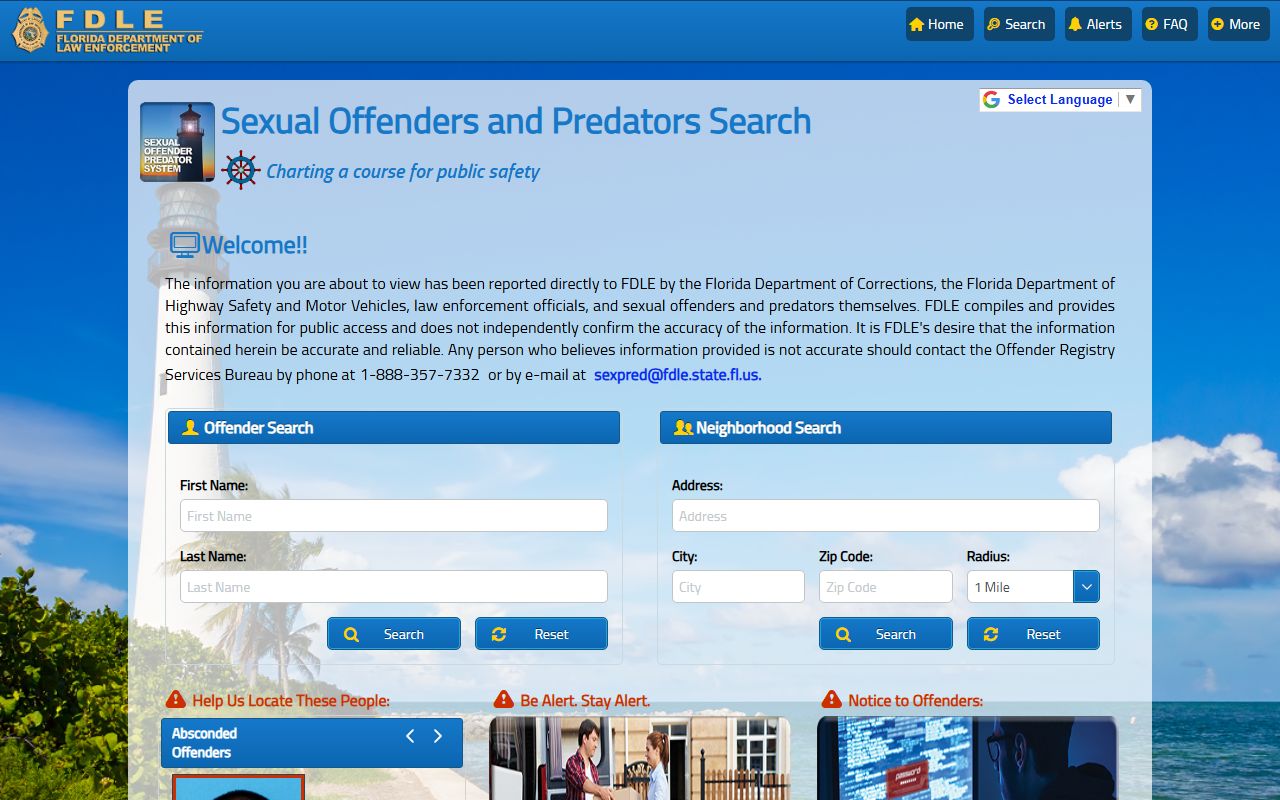
Search results from the FDLE registry include the offender's registered address, photograph, offense history, and designation as an offender or predator, giving Collier County residents detailed information about people required to register after release.
| Field Label | Type | Required | Notes |
|---|---|---|---|
| Name | Text | Optional | Offender or predator name search; partial names may return multiple results. |
| Address / City / County / ZIP | Text / dropdown | Optional | Location-based search; select Collier County to limit results to the county. |
| Radius | Dropdown | Optional | Proximity search around a specified address; useful for neighborhood-level checks. |
| Offender Type / Status | Filters | Optional | Registry-specific filters to separate registered offenders from designated predators. |
Parole and Probation in Collier County After Release
Florida abolished traditional parole for most offenses committed after October 1988. People sentenced under Florida's current sentencing structure are not released on parole; they serve their sentence and are released. However, the court may impose a term of probation or community control as part of or after a prison sentence. The Florida Commission on Offender Review handles parole, conditional release, and control release for older sentences and certain special categories. Probation is supervised by the Florida Department of Corrections Office of Community Corrections.
For Collier County residents placed on probation after a local court conviction, the supervising probation officer works through the Florida DOC regional structure. Conditions of probation are set by the court and enforced by the supervising officer. Standard conditions typically include regular reporting, no new law violations, no leaving the state without permission, no contact with victims, employment or school enrollment, and substance-abuse treatment if ordered. Violations can result in a violation of probation warrant and a return to court.
People released from state prison on conditional release or control release must comply with terms set by the Florida Commission on Offender Review. Those terms may include supervision by a parole officer, residence restrictions, and ongoing treatment requirements. The Clerk's ShowCase court portal may show a probation case category if the court opened a probation case number. Use the Florida DOC offender search to check current supervision status for any state-sentenced person from Collier County.
Collier County criminal records at the Clerk's office will reflect probation-related docket entries such as probation violation hearings, revocations, and court actions. For broader background, see Collier County criminal records.
Reentry Resources in Collier County
People released from Collier County custody often need help with housing, employment, mental health, substance-use treatment, and legal issues. Several local organizations serve this population. The Sheriff's communications guidance states that released inmates can log back into SmartInmate and download photos, messages, and mail received during their detention at no charge. That is a small practical step, but longer-term reentry involves more substantial support.
David Lawrence Center is a Collier County behavioral health organization that provides mental health and substance-use treatment. It is a core partner in the local specialty court system, including Drug Court, Mental Health Court, and related programs tied to the Twentieth Judicial Circuit. People released from jail who need continuing treatment can contact David Lawrence Center for outpatient and community-based services. The Sheriff's Office and courts reference David Lawrence Center as a key reentry and diversion resource.
Legal Aid Service of Collier County provides civil legal help for qualifying low-income residents. After release, people may face housing evictions, loss of public benefits, family court issues, or employment barriers tied to their record. Civil legal aid is often the difference between stabilizing and cycling back into the system. Legal Aid may also be able to help with sealing or expunging eligible records under Florida Statutes 943.0585 and 943.059 once a person qualifies.
- David Lawrence Center - Behavioral health, substance-use treatment, mental health court participation, and outpatient services for Collier County residents re-entering the community.
- Legal Aid Service of Collier County - Civil legal assistance for housing, family, benefits, and record-clearing matters for qualifying low-income residents after release.
- Collier 211 - Call or text 211 to reach a Collier County resource navigator who can connect people with housing, food, transportation, mental health, and crisis support after release.
- Goodwill Industries - Second-chance employment programs and job training for people with criminal records seeking work in Collier County and the surrounding region.
- Florida Rural Legal Services - Regional civil legal aid with coverage in southwest Florida, including farmworker communities in Immokalee and low-income residents across the county.
The Clerk's Self-Help Center at the courthouse in Naples offers public terminals and resources for people handling their own court matters. Florida Courts family-law forms and the Florida Courts E-Filing Portal can help with civil legal matters that come up after release. For warrant-related concerns after release, see Collier County warrant records to check for any outstanding warrants before they become a problem.
Civil Rights Restoration After Release in Florida
Florida felony convictions result in loss of civil rights including the right to vote, hold public office, serve on a jury, and possess firearms. Restoration of those rights after release is not automatic and follows different processes depending on the right involved.
Voting rights were the subject of a 2018 constitutional amendment, Amendment 4, which was later interpreted by the legislature to require full payment of all legal financial obligations including fines, fees, and restitution before a person's voting rights are restored. A person released from Collier County custody after a felony conviction must have completed all terms of their sentence, including any outstanding court costs and fines, before their voting eligibility is restored. The Clerk's fee records in ShowCase show outstanding balances if there are unpaid court financial obligations from the Collier case. Checking whether those are cleared is a key step before attempting to register to vote.
Firearm rights are much harder to restore. Florida does not have a simple administrative process for restoring firearm rights after a felony conviction. Federal law also prohibits felons from possessing firearms unless rights have been restored through a qualifying state process. Most people released after a Florida felony conviction will not be able to legally possess a firearm without federal clemency or a successful civil rights restoration petition, which is a separate and more demanding process than voting rights restoration.
Driver-license reinstatement after release depends entirely on the reason for any suspension or revocation. If the license was suspended because of a DUI conviction, unpaid traffic fines, or a drug-related offense, reinstatement goes through the Florida Department of Highway Safety and Motor Vehicles, not the jail or the court. The Clerk's traffic fee records may show outstanding fines that need to be resolved before FLHSMV will reinstate a license. Employment background checks are a common concern after release. Florida's sealing and expunction laws under F.S. 943.059 and 943.0585 offer a path to restricting public access to some criminal records, but the process requires an FDLE Certificate of Eligibility and a court petition. Not every record qualifies. For more on what appears in Collier County court records and how the expunction process works, see Collier County criminal records.
See Collier County inmate population for data on jail capacity and custody trends that provide broader context for local detention and release patterns.